Fueling Your Young Gymnast: What Every New Gym Parent Needs to Know
Starting competitive gymnastics is exciting! And suddenly, it can also feel like your whole family is on the go. Between school, homework, practices, car rides, grocery runs, and late dinners, it is completely normal to start wondering: Is my gymnast eating enough? What should they eat before practice? Do they need special sports foods or supplements?
Here’s the good news: you do not need a perfect meal plan, expensive supplements, or a fridge full of “healthy” snacks to support your gymnast. What they need most is consistent fuel, a variety of foods, and a positive foundation around eating.
As a sports dietitian and former gymnast, I know the early years of competitive gymnastics can come with a lot of questions. Fueling does not have to be another thing you have to overthink. Let’s start with the basics.

Why nutrition matters for young gymnasts
Gymnastics is a demanding sport. Your gymnast needs energy for tumbling, bars, beam, vault, conditioning, learning new skills, and focusing in practice. But they also need energy to grow, learn at school, develop strong bones, and simply be a kid.
Food supports all of that. Consistent fueling can help your gymnast:
- Have enough energy during practice
- Focus at school and in the gym
- Recover between practices and get better, faster, and stronger
- Support needs of normal growth and development
- Stay healthy through this season and build a strong foundation for the future
The goal is not for food to be something your gymnast has to “earn” through exercise or “burn off” later. Food is fuel. It helps their body do the things they love to do.
Start with balanced meals (not perfection)
Every meal does not have to look perfectly balanced. Real life is busy, and some days dinner is a drive-thru meal or a bowl of cereal after a late practice.
That is okay.
What matters is building a pattern of including different types of foods throughout the day. A balanced meal or snack generally includes:
Carbohydrates for energy
Carbohydrates are the body’s preferred source of energy, especially for a growing athlete who is running, jumping, flipping, and conditioning. They are not something gymnasts need to avoid.
Include foods like bread, cereal, oatmeal, rice, pasta, potatoes, crackers, fruit, tortillas, and granola bars. Carbohydrates help your gymnast have the energy to make it through school, practice, and everything in between.
Protein for growth and recovery
Protein supports growth, muscle repair, and recovery. Include options like eggs, milk, yogurt, cheese, chicken, turkey, fish, beans, tofu, lean beef, or nut butter.
Fats for staying power
Fats support brain development, hormones, and lasting energy. Foods like avocado, nuts, seeds, nut butter, olive oil, cheese, and salmon are all great options.
Fruits and vegetables for micronutrients
Fruits and vegetables provide important vitamins, minerals, fiber, and antioxidants. Keep offering a variety without turning them into a battle. Remember: fruits and vegetables are important, but they cannot be the only thing on your gymnast’s plate. Growing athletes need enough overall energy, too.
The biggest mistake I see: going too long without eating
One of the most common reasons young gymnasts feel tired is not that they are doing anything wrong in the gym. It is that they are accidentally under-fueling around their schedule.
Think about a typical practice day: breakfast may be rushed or skipped all together, lunch might be early, school gets busy, and then practice starts at 4:00 or 5:00 p.m. If your gymnast has not eaten since lunch, they are trying to train on an almost-empty tank.
When kids regularly miss meals or snacks, or go long stretches without food, you may notice:
- Low energy or difficulty finishing practice
- Trouble focusing at school or in the gym
- Big emotions, irritability, or intense hunger later in the evening
- More soreness and slower recovery
- Feeling tired all the time
That does not mean your gymnast needs to eat perfectly. It means a reliable routine matters. For most young gymnasts, that looks like breakfast, lunch, dinner, and two to three snacks that fill in the gaps and support training and recovery.
If practice is right after school, an easy snack in the car or gym bag can make a huge difference.
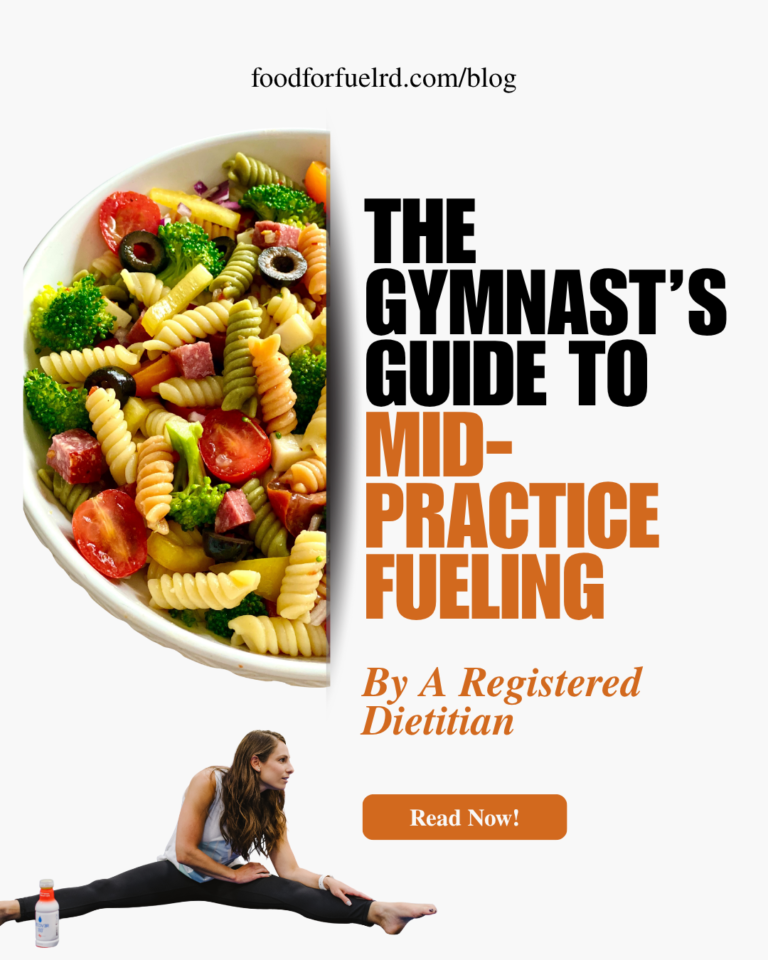
What should a young gymnast eat before practice?
Ideally, your gymnast will have a meal two to three hours before practice. But if that is not realistic with school and practice times, a snack before heading to the gym is still incredibly helpful.
For pre-practice snacks, focus on foods your gymnast likes and knows sit well in their stomach. This meals should be carb heavy, more moderate in protein and fiber, and low in fat.Try:
- A banana and peanut butter wrap
- Greek yogurt with fruit and granola
- Fruit, crackers, and cheese
- A bagel with cream cheese and fruit
- A turkey or cheese sandwich
- Hummus, pita, and carrots
- Pasta with chicken and a side of fruit
There is no one “perfect” pre-practice snack. The best snack is one your gymnast will actually eat consistently. I also recommend practicing with snacks at regular training to learn what fuels your gymnast best for a future competition.
Want more pre-practice fueling ideas? Check out my Pre-Practice Fueling Guide.
Recovery starts when practice ends
After a long, late practice, it is easy to get in the car, head home, eat dessert, and go to bed. But if you want your gymnast to actually adapt to the training they just did, they’ll need to eat, no matter how late.
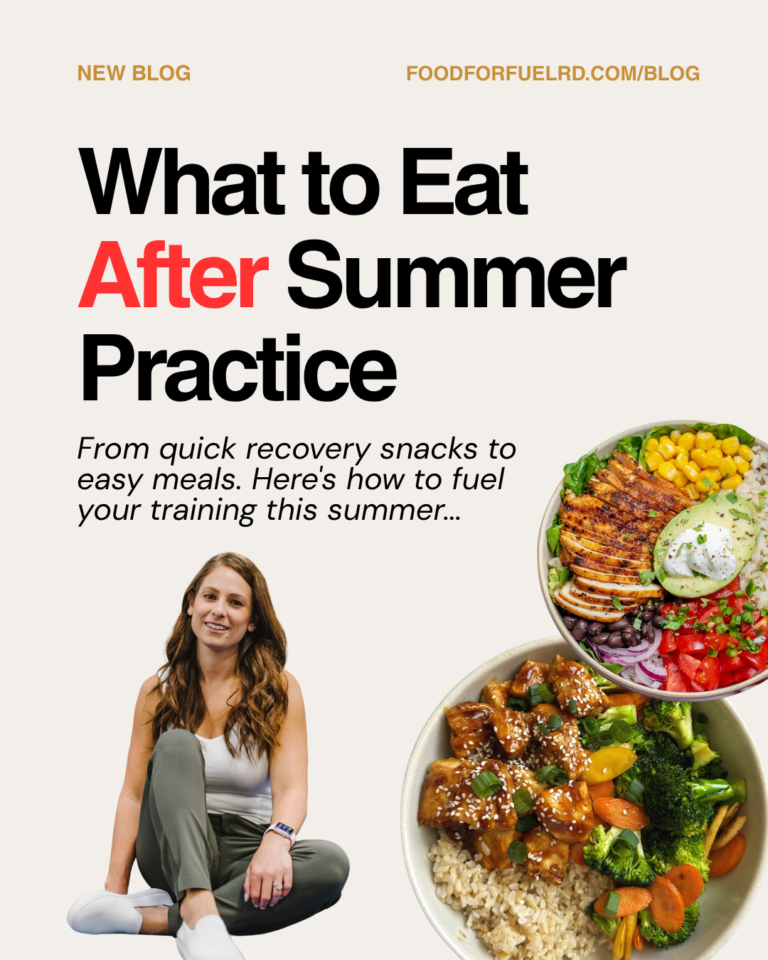
Within about an hour after training, offer a meal or snack with carbohydrates and protein. This helps replenish energy and supports recovery for the next day.
Easy recovery ideas include:
- Chicken, rice, and vegetables
- Turkey tacos
- Pasta with meat sauce
- Salmon, potatoes, and broccoli
- A rice stir-fry with chicken, tofu, or beef
- Greek yogurt with fruit and granola
- Chocolate milk and a sandwich
Late-night dinners do not have to be elaborate. Keep a few quick options on hand so getting something to eat after practice feels doable, not stressful.
Hydration is part of fueling, too
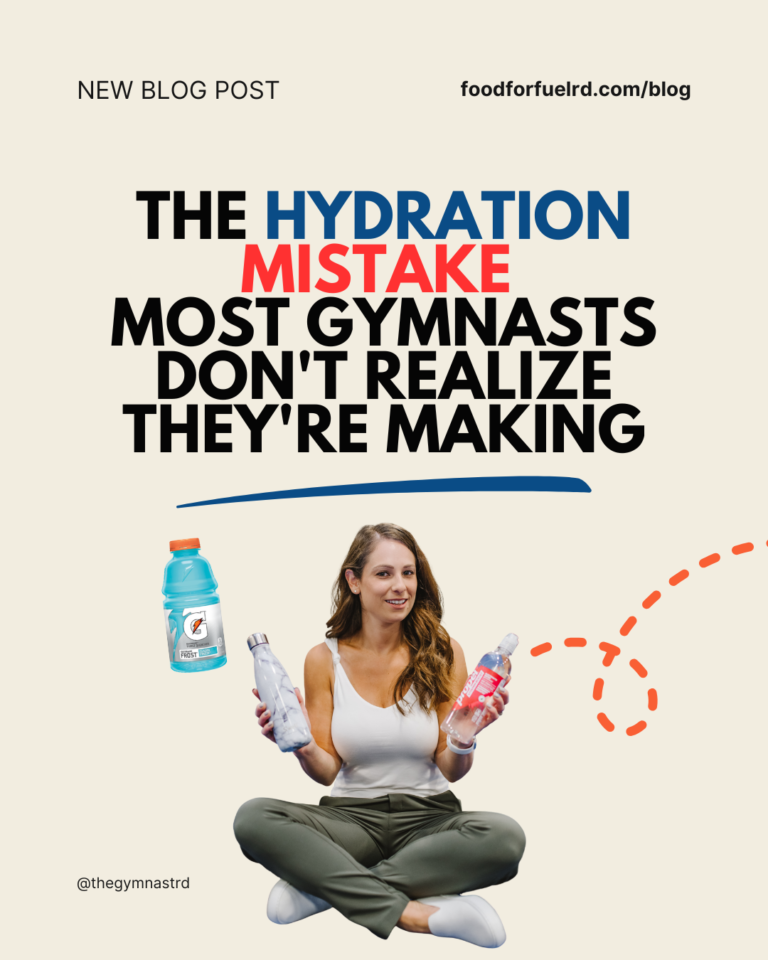
Water supports focus, performance, and recovery. Encourage your gymnast to drink throughout the school day, bring a refillable water bottle to practice, and keep drinking afterward.
For most young gymnasts, water is enough. Sports drinks are usually not necessary at this age for regular practices, although they may be helpful in certain longer or especially intense training situations. If you are unsure what makes sense for your gymnast, a sports dietitian can help you sort through it.
What about protein powder and supplements?
This is one of the questions I hear most from new gym parents. For most young gymnasts, supplements, pre-workout drinks, and protein powders are not necessary. A varied diet with regular meals and snacks can provide what they need for growth, performance, and recovery.
Before starting any supplement, talk with your child’s pediatrician or a sports dietitian. Supplements are not tightly regulated, and some products can contain ingredients that are not appropriate for children or are not listed on the label.
Keep the conversation around food positive
The way we talk about food matters just as much as what we serve. Try to avoid labeling foods as “good,” “bad,” “clean,” or a “treat they have to earn.” Those messages can become especially confusing in a sport where kids already receive a lot of outside pressure.
Instead, help your gymnast learn what food does for their body. Carbs give them energy. Protein helps them grow and recover. A snack before practice can help them feel stronger and more focused. And yes, there is room for fun foods, too.
Your job is not to make every meal perfect. Your job is to offer consistent opportunities to eat, keep food conversations supportive, and help your gymnast build habits that will support them in and out of the gym.
You do not have to figure this out alone
Starting competitive gymnastics comes with a learning curve for the entire family. You are learning schedules, team expectations, meet weekends, and how to keep a busy, growing athlete fueled along the way. Start with the basics: regular meals and snacks, enough carbohydrates and protein throughout the day, water, and flexibility when life gets busy. Those small habits really do add up.
If you are a parent of a young compulsory gymnast and you are tired of guessing what to pack, what to serve, or how to talk about food without making it stressful, my Fueling the Compulsory Gymnast Workbook was made for you. It is an interactive, age-appropriate guide for parents and gymnasts to work through together, with meal and snack ideas, a personal fueling schedule, hydration guidance, and practical tools for building confidence around food. Get the workbook here and start making fueling feel simpler for your family.