
REDs in Gymnasts: Fueling Recovery & Injury Prevention
The sport of gymnastics asks a lot of the body.
Hours of training. Repetitive impact. Powerful tumbling passes. High-flying dismounts. Endless repetitions of skills that require strength, flexibility, coordination, and precision.
And then, after all of that, gymnasts are expected to come back the next day and do it all again.
They need to be stronger. Faster. More powerful. More consistent. They need to learn new skills, recover from difficult practices, and stay healthy enough to keep progressing through the season.
But here’s something we don’t always talk about enough in gymnastics:
Getting better at gymnastics doesn’t happen during training alone. It also depends on how well the body recovers from that training.
And one of the biggest pieces of the recovery puzzle is nutrition.
When a gymnast consistently doesn’t eat enough to support the demands of training and everyday life, their body may struggle to keep up with everything being asked of it. Over time, this can contribute to a condition known as Relative Energy Deficiency in Sport, or REDs.
REDs can affect much more than energy levels. It can influence bone health, muscle recovery, injury risk, hormone function, immune health, and athletic performance.
For gymnasts, that matters.
Because the goal isn’t simply to get through today’s practice. It’s to help athletes build the strength, resilience, and physical capacity they need to continue improving over months and years of training.
Let’s talk about what REDs is, how underfueling can affect recovery in gymnastics, and why consistent nutrition is one of the most important tools we have to support performance, injury prevention, and healing.
What Is REDs in Gymnastics?
Relative Energy Deficiency in Sport, commonly called REDs, is a condition that occurs when an athlete’s energy intake is insufficient to support the combined demands of exercise and the body’s other essential functions.
In simple terms, the body is being asked to do more than the available energy can adequately support.
Every gymnast needs energy for training. But that energy also supports a long list of processes happening behind the scenes, including:
- Building and maintaining muscle
- Repairing tissues after training
- Maintaining healthy bones
- Supporting hormone production and function
- Fighting off illness and supporting the immune system
- Regulating body temperature
- Supporting brain function, concentration, and mood
- Growing and developing during childhood and adolescence
When a gymnast consistently under fuels, the body may begin to make adjustments to conserve energy. Processes that are important for long-term health and athletic development can become impaired.
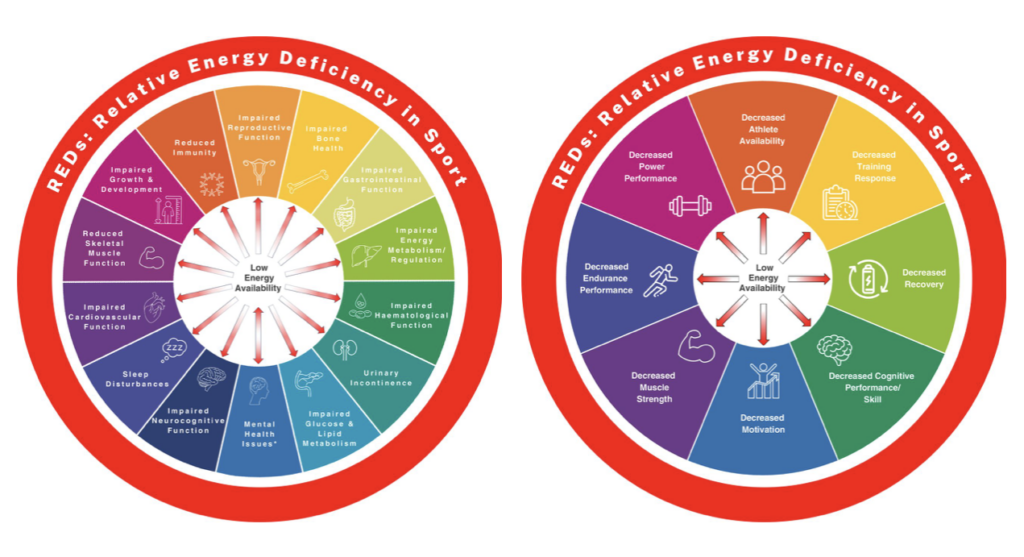
This is the underlying concern with REDs.
It’s not simply about feeling hungry or tired after a long practice. It’s about the potential consequences of a prolonged mismatch between what the body needs and what it receives.
Why Are Gymnasts at Risk for REDs?
Gymnastics creates unique challenges when it comes to meeting an athlete’s nutritional needs.
Practices can be long and physically demanding. Gymnasts may spend hours repeating skills, performing strength and conditioning exercises, and putting their bones and muscles under substantial stress.
At the same time, many gymnasts are balancing school, homework, early mornings, long commutes, and other activities.
That can make it difficult to eat enough, consistently throughout the day.
Other factors can contribute, too:
- Limited time to eat between school and practice
- Skipping snacks because of a busy schedule
- Small appetites or difficulty eating enough at designated meals times (like early breakfast or school lunch)
- Fear of certain foods or beliefs that some foods are inherently bad.
- Pressure surrounding body size, shape, or appearance
- Misunderstandings about how much food an athlete needs
- Increasing training volume without increasing food intake
- Appetite changes that don’t keep pace with increasing training demands
Importantly, under fueling isn’t always intentional.
A gymnast doesn’t have to be actively restricting food or struggling with an eating disorder to experience low energy availability. Sometimes, the demands of training simply increase while eating habits remain the same.
And because gymnasts may be accustomed to feeling tired or sore, early warning signs can be overlooked.
A gymnast can be working incredibly hard, following their training plan, and doing everything their coach asks while still not giving their body enough energy to recover.
That is why understanding REDs is so important for gymnasts, parents, and coaches.
Recovery in Gymnastics Starts Before the Injury Happens
When we talk about recovery in gymnastics, we often think about what happens after an injury.
An athlete sprains an ankle, fractures a bone, or develops a stress injury. Suddenly, nutrition becomes part of the conversation because the body needs to heal.
But recovery isn’t something that begins when an injury occurs.
It’s happening every single day.
Every practice creates stress in the body. Muscles experience stress, connective tissues are loaded, bones respond to impact, and the nervous system works to coordinate increasingly complex movements.
With appropriate training, nutrition, and rest, the body adapts to these demands.
Muscles repair and become stronger. Bones remodel in response to loading. The body develops the capacity to tolerate training and perform increasingly difficult skills.
This is part of the adaptation process that helps gymnasts progress.
However, training is only one side of the equation.
Training provides the stimulus. Recovery allows the body to adapt to it.
If a gymnast repeatedly trains without enough energy, adequate rest, or sufficient recovery time, the body may struggle to keep pace with the demands being placed on it.
Over time, this can interfere with performance and increase concern for certain health problems, particularly when low energy availability occurs alongside high training loads and inadequate rest.
This is why nutrition should not be viewed as something separate from training.
It’s part of the process that allows training to produce the results gymnasts are working toward.
How REDs Can Affect Day-to-Day Recovery in Gymnasts
One of the challenges with REDs is that its effects aren’t always dramatic or immediately obvious.
A gymnast may continue attending practice, completing routines, and learning skills. From the outside, everything may look fine.
But internally, their body may be struggling to keep up.
Here are several ways inadequate fueling can affect recovery and athletic development.
1. Muscle Repair and Strength Development
Gymnasts need strong muscles to perform powerful tumbling passes, control landings, hold positions, and generate the force required for difficult skills.Training challenges the muscles, and the body responds by repairing and adapting to that stress.That process requires adequate energy and nutrients, including protein.
When a gymnast consistently doesn’t eat enough overall, the body may have fewer resources available to support muscle repair and other important physiological functions.
Even when protein intake is adequate, insufficient overall energy intake can interfere with the body’s ability to build and maintain muscle effectively.
This matters for gymnasts who are working hard to improve their strength, power, and endurance. If a gymnast is consistently under fueled, adding more conditioning or extra repetitions may not be the answer to a strength plateau. Sometimes, the missing piece is giving the body the resources it needs to adapt to the training already happening.
2. Energy Levels and Performance Consistency
Have you ever noticed a gymnast who seems to have plenty of energy at the beginning of practice but struggles to maintain it as training continues?
Or an athlete who seems unusually exhausted after practice, struggles to concentrate at school, or feels like every workout takes more effort than it should?
There are many potential reasons for fatigue, and nutrition is only one piece of the puzzle. However, inadequate energy intake and insufficient carbohydrate availability can contribute to reduced energy, poor exercise tolerance, and difficulty sustaining high-intensity performance.
Gymnastics requires repeated bursts of explosive power, precise coordination, concentration, and the ability to execute skills under fatigue.
When a gymnast isn’t adequately fueled, maintaining that level of performance can become more difficult.
Over time, persistent underfueling may also contribute to changes in training tolerance and recovery between sessions.
If practice feels harder and harder despite consistent training, the answer isn’t always to work harder. It may be time to look at whether the body has enough resources to support the work.
3. Soreness and Recovery Between Practices
Some muscle soreness is a normal response to challenging training, particularly when an athlete performs unfamiliar exercises or increases training demands.
But there’s a difference between expected soreness and a pattern of feeling persistently exhausted, struggling to recover, or experiencing declining performance.
Adequate nutrition helps support the processes involved in repairing tissues and replenishing energy used during training.
Carbohydrates help replenish muscle glycogen, an important fuel source for repeated high-intensity exercise. Protein supplies amino acids needed for tissue repair and remodeling. Dietary fat contributes energy and supports normal hormone function. Vitamins, minerals, and other nutrients support numerous processes involved in health and recovery.
No single food or nutrient can guarantee faster recovery.Instead, it’s the overall pattern of eating enough, eating regularly, and consuming a variety of foods that helps create the conditions the body needs to recover.
For gymnasts training multiple days per week, this means recovery nutrition cannot be limited to an occasional protein shake after a particularly hard practice.It needs to be part of everyday life.
4. Concentration, Mood, and Mental Performance
Gymnastics isn’t just physically demanding. It requires substantial mental effort. Athletes must remember corrections, process feedback, make quick decisions, manage nerves, and maintain focus while performing difficult skills.
The brain needs energy, too.
Inadequate fueling can contribute to fatigue, difficulty concentrating, irritability, and changes in mood. These symptoms are nonspecific and may have many causes, but they deserve attention when they occur alongside other signs of underfueling or inadequate recovery.
For a young gymnast, the effects may extend beyond the gym.
They may struggle to stay awake during class, feel unusually overwhelmed by homework, or have less energy for friends and family.
These changes shouldn’t automatically be attributed to RED-S. Sleep, stress, illness, mental health, and other medical conditions can also contribute.
But when a gymnast is experiencing persistent fatigue or changes in performance, looking at their overall health and nutritional intake is an important part of the conversation.
REDs, Bone Health, and Injury Prevention in Gymnastics
One of the most important connections between REDs and gymnasts is bone health.
Gymnastics places substantial demands on the bones. Appropriate loading can help bones become stronger and better able to tolerate the demands of sport. However, bone health depends on more than training alone.
Bones are living tissues that continually undergo remodeling. They require energy and a range of nutrients to maintain their structure, repair microscopic damage, and adapt to mechanical loading. Adequate energy availability, calcium, vitamin D, protein, and other nutrients all play roles in supporting bone health.
When an athlete consistently underfuels, bone formation and remodeling can be affected. Hormonal changes associated with low energy availability can also compromise bone health.This is particularly concerning for growing gymnasts because childhood and adolescence are important periods for building bone mass.
How Can REDs Increase Injury Risk?
REDs is associated with impaired bone health and an increased risk of bone stress injuries, among other health and performance consequences.
Bone stress injuries occur when repetitive loading exceeds the bone’s ability to repair and adapt. They exist along a spectrum, ranging from stress reactions to stress fractures.
In gymnastics, these injuries can be especially disruptive because they may require substantial modifications to training and impact activities.
Low energy availability is not the only cause of bone stress injuries. Training errors, rapid changes in training volume, biomechanics, previous injuries, recovery time, and other medical factors can also contribute.
However, when a gymnast is underfueled, the body may have more difficulty maintaining healthy bone remodeling while simultaneously meeting the demands of repetitive impact.
This is why injury prevention needs to extend beyond strengthening exercises, landing mechanics, and appropriate progressions.
It also needs to include adequate nutrition, sufficient rest, and attention to the athlete’s overall health.
Why This Matters During Growth and Puberty
Young gymnasts are not simply smaller versions of adult athletes.
Their bodies are growing and developing while they train.
During childhood and adolescence, adequate energy and nutrient intake supports not only athletic performance but also growth, puberty, bone development, and other essential physiological processes.
When training demands increase during these years, nutritional needs may increase as well.
A gymnast who is growing, training more hours, and learning increasingly difficult skills may need substantially more food than they did a year earlier.
If their eating habits don’t change to meet those demands, they may unintentionally fall behind.
Changes in growth patterns, delayed puberty, recurrent injuries, and persistent fatigue deserve appropriate evaluation, particularly when they occur together.
A gymnast shouldn’t have to choose between progressing in the sport and supporting their growth and development.
The goal is to provide the body with enough energy to do both.
REDs and Injury Recovery: Why Fueling Matters After an Injury
Let’s say a gymnast develops an injury. Training is modified. Impact activities may be restricted. The athlete begins working with their medical team to recover.
It’s understandable that the gymnast, parent, or coach might focus on the injury itself: the diagnosis, the treatment plan, the timeline for returning to practice, and the exercises needed to regain strength.
But nutrition remains an important part of the recovery process.
An injured athlete still needs energy to heal.
In fact, injury recovery can place substantial demands on the body, even when training volume has decreased.
The body must support tissue repair, immune function, bone remodeling, and other processes involved in healing.
Depending on the injury and the extent of immobilization or activity restriction, the athlete may also need to preserve muscle mass and support the gradual restoration of strength and function.
Why Eating Less During an Injury Can Be Counterproductive
When an injured gymnast is unable to train normally, it’s easy to assume they should automatically eat less because they’re burning less energy during practice.
But this oversimplifies the body’s needs during injury recovery.
Although energy expenditure may decrease when training is reduced, the body still needs energy for basic physiological functions and healing. The appropriate amount depends on the injury, the athlete’s growth and development, their activity level, and other individual factors.
For a gymnast who was already under fueling before the injury, reducing food intake further can be particularly concerning. The body may already be struggling to meet its nutritional needs. An injury adds another demand for energy and nutrients. Inadequate energy intake during recovery may interfere with healing and make it more difficult to maintain muscle and support normal physiological function.
This is especially important when the injury involves bone health or when REDs is suspected.
Rather than automatically reducing portions or eliminating snacks, families should work with the athlete’s medical team and, when appropriate, a sports dietitian to determine how nutritional needs may change during recovery.
The goal is to support healing while meeting the athlete’s ongoing needs for health, growth, and development.
The Nutrients That Support Injury Recovery
There is no single food, supplement, or meal plan that can guarantee an injury will heal faster.
However, several nutritional factors are important for supporting the body’s healing processes.
Energy: The body needs sufficient overall energy to support healing, maintain essential physiological functions, and preserve lean tissue.
Protein: Protein supplies amino acids needed for tissue repair and remodeling. Including protein regularly throughout the day can help support these processes.
Carbohydrates: Carbohydrates provide energy for daily activities and help replenish glycogen stores. They remain important even when an athlete’s training is temporarily reduced.
Essential Fats: Fat provides energy and essential fatty acids and supports normal hormone function.
Calcium and Vitamin D: These nutrients are particularly relevant to bone health. Adequate calcium intake and vitamin D status help support normal bone development and maintenance.
Iron: Iron supports oxygen transport and other essential physiological processes. Iron deficiency can contribute to fatigue and reduced exercise capacity, making appropriate assessment important when symptoms or risk factors are present.
Other vitamins and minerals: Many micronutrients contribute to tissue repair, immune function, and normal physiological processes. Eating a varied diet helps provide these nutrients.
More is not always better. High-dose supplements aren’t automatically beneficial, and some can be harmful when used inappropriately.
For a gymnast recovering from an injury, the priority is usually a sufficient, balanced eating pattern tailored to their individual needs (not a collection of supplements marketed as recovery shortcuts).
Returning to Gymnastics Requires More Than Pain-Free Movement
As a gymnast recovers, the goal is not simply to get through daily activities without pain.
They need to gradually rebuild the strength, coordination, confidence, and physical capacity required for gymnastics.
The timeline and criteria for returning to training depend on the specific injury and the athlete’s clinical progress.
For bone stress injuries, for example, the medical team may need to consider the injury location, healing progress, underlying risk factors, and whether contributing factors such as low energy availability have been addressed.
If RED-S or underfueling contributed to the injury, returning to the same training schedule without addressing the nutritional concerns may leave the athlete vulnerable to continued health and recovery problems.
This is why injury management should consider the whole athlete, not just the injured body part.
Medical care, appropriate rehabilitation, nutrition, sleep, and training modifications all have roles to play.
How Can Gymnasts Fuel for Better Recovery Every Day?
Understanding REDs is important, but what does this actually look like in everyday life? The good news is that supporting recovery doesn’t require a perfect diet, complicated meal plans, or expensive supplements. It starts with consistent habits that help the body meet the demands of training and daily life.
Here are five practical places to start.
1. Eat Consistently Throughout the Day
One of the most common challenges for gymnasts is going too long without eating.
A gymnast might skip breakfast before school, have a rushed lunch, head straight to practice, and not eat a substantial meal until late in the evening. Even if their meals are nutritious, long gaps between eating opportunities can make it difficult to meet their overall energy needs. A more supportive approach includes regular meals and snacks throughout the day, with additional food opportunities around training as needed.
For example:
- Breakfast before school
- A balanced snack at school
- Lunch during the school day
- A second lunch or big snack before practice
- Fuel and fluids during practice as appropriate
- A meal or substantial snack after practice
- Additional snacks as needed to meet individual requirements
The exact timing and amount of food will vary by athlete, schedule, appetite, and training demands.
The goal isn’t to follow a rigid eating schedule. It’s to make sure the gymnast has reliable opportunities to eat enough to support their body.
2. Fuel Before and After Practice
What a gymnast eats around practice can help support training quality, minimize muscle and tissue breakdown, and improve recovery.
A pre-practice snack can provide energy for the session, particularly when the previous meal was several hours earlier. Depending on the timing and the athlete’s preferences, options might include:
- Yogurt with fruit and granola
- Bagel with peanut butter and banana
- Crackers, cheese, and fruit
- Overnight oats
- A bagel with eggs and fruit
- Pasta with chicken
- Rice bowl with ground meat and veggies
After practice, a meal or snack containing carbohydrates and protein can help replenish energy stores and provide nutrients needed for tissue repair.
Examples include:
- Chocolate milk and a sandwich
- Yogurt with granola and fruit.
- Rice with chicken or tofu
- Eggs, toast, and fruit
- A smoothie bowl with granola
- Pasta with meat sauce or a plant-based protein.
These are examples, not rules. The best option is one the gymnast enjoys, tolerates comfortably, has access to, and can eat consistently.
And remember: post-practice fueling doesn’t have to be elaborate. Sometimes the most helpful strategy is having something convenient ready to eat on the drive home to maximize sleep.
3. Eat Enough Overall, Not Just Protein
Protein gets a lot of attention in the sports nutrition world, and for good reason. It’s important for muscle repair and many other physiological functions.
But protein cannot do its job in isolation. A gymnast can consume protein regularly and still struggle to recover if their overall energy intake is inadequate.
Carbohydrates, fats, protein, vitamins, minerals, and fluids all contribute to health and performance in different ways.
Rather than focusing on one nutrient, start by asking broader questions:
- Is the gymnast eating regular meals and snacks?
- Are they getting enough food to support their training schedule?
- Are they including a variety of foods?
- Are they consistently hungry, tired, or struggling to recover?
- Are busy schedules or food-related fears making it difficult to eat enough?
For many gymnasts, improving overall consistency and adequacy is more useful than adding another protein product to an already insufficient eating pattern.
4. Prioritize Sleep and Rest
Nutrition is a major part of recovery, but it isn’t the only part.
Sleep supports numerous physiological processes involved in learning, adaptation, immune function, and physical recovery.
Gymnasts also need appropriate rest between demanding training sessions and a training plan that accounts for their age, experience, and current physical capacity. A gymnast who trains for hours, eats inconsistently, and regularly sacrifices sleep to finish homework may struggle to recover, even if their pre-practice snack is ideal.
Parents and coaches can help by considering the full picture:
- Is the gymnast getting sufficient sleep for their age?
- Are training demands appropriate?
- Are there opportunities for recovery between demanding sessions?
- Is the athlete managing school and training without consistently sacrificing meals or rest?
- Are persistent fatigue or declining performance being evaluated rather than dismissed?
Recovery works best when nutrition, sleep, training, and overall health are considered together.
5. Pay Attention to Patterns, Not Just Individual Symptoms
Every gymnast has days when they feel tired or sore. One difficult practice doesn’t automatically mean something is wrong. However, recurring patterns deserve attention. Watch for changes such as:
- Persistent fatigue or low energy.
- Declining performance despite consistent training.
- Difficulty recovering between practices.
- Recurrent injuries or bone stress injuries.
- Changes in growth patterns or delayed puberty.
- Menstrual irregularities in athletes who menstruate.
- Frequent illness.
- Increasing anxiety around food or growing food restrictions.
- Significant changes in mood, concentration, or motivation.
None of these signs independently confirms REDs. Many can have other explanations, and some athletes experiencing low energy availability may not display obvious symptoms.
The important thing is to avoid dismissing persistent changes as a normal part of being a gymnast.
If you notice concerning symptoms, consult an appropriate healthcare professional. Depending on the situation, evaluation may involve a physician, sports dietitian, athletic trainer, mental health professional, or other members of the athlete’s care team.
Early assessment can help identify contributing factors and guide an appropriate plan.
What Can Parents and Coaches Do to Support Recovery?
Gymnasts don’t make fueling decisions in a vacuum.
Parents influence the food available at home, the timing of meals, and the messages children hear about food and their bodies.
Coaches influence training schedules, break opportunities, team culture, and how athletes interpret fatigue and performance struggles.
Both can play an important role in creating an environment where recovery is supported rather than overlooked.
For Parents: Make Fueling Easier
Parents don’t need to become nutrition experts to help their gymnast.
Start with practical support.
Keep convenient snacks available. Help your gymnast plan for the transition between school and practice. Make sure there’s time to eat after training. Offer a variety of foods without labeling them as good, bad, clean, or unhealthy.
Pay attention to persistent fatigue, recurrent injuries, and changes in growth or development.
And if your gymnast is injured, remember that they still need nourishment, even when their training looks very different.
Try to avoid making food contingent on activity. A gymnast doesn’t need to earn dinner by completing practice, and they don’t lose their need for nourishment when they are resting.
If you’re concerned about REDs, seek professional guidance rather than attempting to diagnose or manage the condition on your own.
For Coaches: Recognize the Signs and Support the Athlete
Coaches are often among the first people to notice when something changes.
They may see a gymnast struggling to maintain energy throughout practice, taking longer to recover between sessions, experiencing repeated injuries, or having difficulty sustaining performance.
These observations can be valuable.
However, coaches should not be expected to diagnose RED-S or prescribe nutrition plans.
Instead, they can help create conditions that support athlete health:
- Allow appropriate opportunities for food and hydration.
- Avoid treating fatigue as a character flaw or lack of motivation.
- Encourage athletes to communicate when they feel unwell or are struggling to recover.
- Avoid weight-based comments and unnecessary focus on body size.
- Support appropriate training modifications during injury recovery.
- Communicate concerns with parents and the athlete’s healthcare team when appropriate.
- Reinforce that eating enough is part of being a prepared athlete.
Most importantly, coaches can help shift the conversation from simply asking, “How much more can we do?” to also asking, “What does this athlete need to recover from the work they’re already doing?”
That shift can make a meaningful difference in how athletes experience their sport.
The Bottom Line: You Can’t Out-Train an Under Fueled Body
Gymnastics requires dedication, repetition, and hard work. But working harder isn’t always the answer when a gymnast is struggling with fatigue, strength development, recovery, or recurring injuries.
Sometimes, the missing piece isn’t another conditioning circuit, another repetition, or another hour in the gym.
Sometimes, the body needs more support.
REDs is an important reminder that nutrition affects much more than what happens during a single practice. It can influence bone health, muscle adaptation, hormone function, immune health, and an athlete’s ability to tolerate and recover from training.
For gymnasts, adequate fueling is part of both injury prevention and injury recovery. It helps provide the foundation for the body to adapt to training, maintain health, and support the demands of growth and development.
And while nutrition cannot eliminate every injury or guarantee that a gymnast will progress faster, consistently meeting nutritional needs helps create the conditions for healthy athletic development.
The goal isn’t just to help gymnasts get through practice today. It’s to help them recover, grow stronger, and keep doing the sport they love for years to come.
Want to Help Your Gymnast Build a Stronger Foundation?
If you’re a gymnast parent or coach who wants to better understand how nutrition supports energy, recovery, and performance, you don’t have to figure it all out on your own.
Inside my Fueled Gymnast Academy, I teach the sports nutrition fundamentals that help gymnasts and their families build practical, sustainable fueling habits around real-life training and school schedules.
From understanding what to eat before and after practice to navigating busy days, supporting recovery, and building a healthier relationship with food, the goal is to make fueling feel less confusing and more manageable.
Because helping a gymnast reach their potential isn’t just about what happens in the gym.
It’s about giving their body the support it needs to do what we’re asking of it.
Learn more about the Fueled Gymnast Academy and start building a stronger foundation for your gymnast’s performance, recovery, and long-term health.
Medical disclaimer: This article is intended for educational purposes and is not a substitute for individualized medical or nutrition advice. RED-S and bone stress injuries require appropriate assessment by qualified healthcare professionals. If you are concerned about a gymnast’s health, growth, performance, or recovery, consult their healthcare team




2 Comments