Gymnast Nutrition: A TEAM Approach for Coaches & Parents
Gymnastics at the club level is often viewed as an individual sport.
When a gymnast steps onto the beam, prepares for a tumbling pass, or salutes the judges before a routine, it’s easy to focus on the athlete standing alone on the competition floor.
But here’s what we don’t always see.
Behind every gymnast is a team.
It’s the parents packing snacks for a long day at the gym. The coaches planning practices and helping athletes safely learn new skills. The medical professionals supporting recovery after an injury. And the people working behind the scenes to make sure that gymnast has the energy, strength, and resources to keep showing up.
And one important piece of that team is often overlooked: nutrition.
As a registered dietitian and Board Certified Specialist in Sports Dietetics who specializes in gymnastics nutrition, I’ve seen how much of a difference proper fueling can make in a gymnast’s health, performance, recovery, and overall experience in the sport.
I’ve also seen how confusing nutrition can become when parents, coaches, and gymnasts are all trying to figure it out on their own.
Parents are hearing one thing on social media. Coaches may have learned something different during their own gymnastics careers. And gymnasts are trying to make sense of it all while balancing school, long practices, competitions, and everything else going on in their lives.
Everyone wants the same thing: for the gymnast to feel good, perform well, stay healthy, and enjoy the sport they’ve worked so hard to pursue.
But wanting the same thing doesn’t always mean everyone knows how to get there.
That’s why I believe one of the most effective ways to improve nutrition for gymnasts is to take a TEAM approach.
When coaches, parents, and athletes work together with qualified nutrition professionals, fueling becomes less confusing, more consistent, and much easier to put into practice.
Let’s talk about what that looks like and why it matters.
Why Nutrition Matters for Gymnasts
Gymnastics places unique demands on the body.
Between hours of training, repetitive impact, strength and power requirements, skill development, and the physical demands of growing and developing, gymnasts need consistent energy and nutrients to support both their sport and their everyday lives.
Food isn’t just about satisfying hunger or getting through the next practice.
Nutrition helps provide the energy and building blocks gymnasts need to train, recover, adapt, grow, and stay healthy.
When a gymnast consistently eats less than their body needs, it can become harder to meet those demands.
You might notice that your gymnast:
- Seems exhausted before practice even begins.
- Struggles to maintain energy and concentration throughout training.
- Feels unusually sore or takes longer to recover between practices.
- Has difficulty building strength or adapting to training.
- Experiences recurrent injuries or bone stress injuries.
- Has trouble concentrating at school or feels exhausted throughout the day.
- Experiences changes in growth, development, or menstrual function.
- Seems more irritable, overwhelmed, or emotionally drained than usual.
Of course, these signs can have many causes. Nutrition isn’t always the answer, and coaches and parents shouldn’t be expected to diagnose the problem themselves.
But inadequate fueling is one important factor worth considering when a gymnast isn’t feeling or performing like themselves.
Consistently consuming less energy than the body needs can lead to low energy availability and contribute to Relative Energy Deficiency in Sport (REDs), a condition that can affect multiple body systems, including bone health, reproductive function, recovery, and performance.
And here’s the thing: you don’t have to wait until a gymnast is injured, exhausted, or struggling with performance to start talking about nutrition.
Fueling education is most effective when it’s part of supporting athletes from the beginning, not something introduced only after a problem develops.
Why Is Gymnast Nutrition So Confusing?
If you’ve ever tried to find reliable nutrition advice for a gymnast, you probably know how overwhelming it can be.
One person says athletes should avoid sugar. Another recommends cutting out processed foods. Someone else insists that carbohydrates are the problem, that certain foods cause inflammation, or that every athlete needs a specific supplement.
Then there’s the generic nutrition advice that might work for a sedentary adult but doesn’t account for the energy demands of a growing athlete training 15-20+ hours each week.
It’s a lot to sort through.
And when you’re trying to do what’s best for a gymnast, it can be difficult to know which recommendations are actually helpful.
The problem isn’t that parents don’t care, coaches aren’t trying, or gymnasts aren’t motivated.
The problem is that we’re often asking people to make important nutrition decisions without giving them the sport-specific education and support they need.
Let’s look at the challenges each member of the gymnastics team may face.
Gymnastics Coaches: Supporting Performance Without Becoming Nutrition Experts
Coaches want their athletes to have the energy to get through practice, develop new skills, build strength, recover between practices, and stay healthy throughout the season.
They also spend a significant amount of time with their athletes.
Coaches may be the first to notice when a gymnast seems unusually fatigued, struggles to keep up with a familiar training routine, or experiences a change in performance.
But recognizing a change and knowing what to do next are two different things.
Many coaches grew up in gymnastics themselves. They may have learned about nutrition through their own experiences, advice from former coaches, or information that was considered standard practice years ago.
Some of that information may be helpful. Other recommendations may be outdated, overly restrictive, or simply not appropriate for growing athletes.
Coaches are also navigating an important boundary: they want to support their athletes, but they aren’t expected to diagnose nutritional problems, prescribe diets, or manage medical conditions.
They shouldn’t have to.
What coaches can do is help create an environment where fueling is encouraged, athletes have reasonable opportunities to eat and hydrate, concerns are recognized early, and families know where to turn for qualified support.
With the right education and resources, coaches can become an important part of a gymnast’s support system without taking on responsibilities outside their scope of practice.
Gymnast Parents: Trying to Do the Right Thing in a Very Busy World
If you’re a gymnastics parent, you probably have enough on your plate already.
Between school schedules, work, transportation, practices, competitions, and the rest of family life, making sure your gymnast has everything they need can feel like a full-time job.
And feeding an athlete who trains for several hours a day? That’s another layer.
Maybe your gymnast is a picky eater.
Maybe they come home from school with barely enough time to change before practice.
Maybe they tell you they’re not hungry, even though they’ve been at the gym for three hours.
Or maybe you’ve tried packing snacks, planning meals, and buying all the foods you’ve been told are healthy, but you’re still not sure whether your gymnast is eating enough to support their training.
Then you open social media and find a dozen different opinions about what growing athletes should eat.
It’s exhausting.
Parents are often left trying to piece together nutrition advice from general health recommendations, online meal plans, other gymnastics families, and whatever information happens to appear in their feeds.
But feeding a competitive gymnast isn’t the same as feeding someone who has very different energy needs and activity levels.
Growing athletes need enough food to support their training, development, and everyday lives. That includes carbohydrates for energy, protein to support growth and tissue repair, dietary fat for essential functions, and a variety of vitamins and minerals.
They also need practical strategies that fit their schedules, preferences, appetites, and family routines.
Parents don’t need another list of foods to eliminate or a complicated meal plan that takes hours to follow.
They need reliable information, realistic solutions, and the confidence to make fueling work for their family.
Gymnasts: Trying to Feel Good, Get Better, and Keep Up
And then there’s the gymnast…
They’re the ones putting in the hours, learning new skills, managing school, navigating friendships, and trying to keep up with everything expected of them.
They want to feel strong.
They want to have enough energy to finish practice.
They want to see their hard work pay off when a skill finally clicks or a routine comes together.
They want to recover between practices and feel prepared when competition day arrives.
But many gymnasts never receive a clear explanation of how nutrition supports those goals.
They may not realize that feeling exhausted all the time isn’t necessarily just part of being a gymnast.
They may not understand why eating regularly throughout the day matters, especially when school lunch happens hours before practice.
They may not recognize that their bodies need additional energy during growth spurts or periods of increased training.
And they may have picked up the message that eating less, avoiding certain foods, or choosing the healthiest option every time is somehow better.
These messages can become particularly confusing in a sport where athletes may feel pressure to look a certain way.
When nutrition education focuses on restriction, appearance, or rules about good and bad foods, it can unintentionally make eating more stressful.
Instead, gymnasts deserve to understand how food supports their bodies, why fueling matters, and how to make choices that help them feel and perform their best.
They also deserve to be part of the conversation.
Nutrition education shouldn’t just be something adults talk about around them. It should give gymnasts the knowledge and confidence to participate in their own fueling decisions as they grow.
The Goal Isn’t to Blame Anyone. It’s to Get Everyone on the Same Page.
When we look at the challenges facing coaches, parents, and gymnasts, one thing becomes clear.
Everyone wants to help.
Coaches want their athletes to succeed. Parents want their children to be healthy and happy. Gymnasts want to improve, feel good, and enjoy the sport they’ve committed so much time to. But when everyone is working from different information, even well-intentioned decisions can make nutrition more complicated than it needs to be.
A coach might encourage an athlete to eat more before practice, while the gymnast is worried about eating too close to training.
A parent might pack a snack, only to have their gymnast leave it untouched because they don’t feel hungry yet.
A gymnast might struggle with fatigue or recurring injuries without realizing that inconsistent fueling could be contributing to the problem.
And everyone is left wondering why something that seems so simple is so difficult to figure out.
This is where a team approach can make a meaningful difference.
The goal isn’t for coaches to become dietitians, parents to become meal-planning experts, or gymnasts to figure everything out on their own.
It’s for everyone to have access to consistent, evidence-based information and understand how they can contribute to a healthier training environment.
Because nutrition works best when the people supporting the gymnast are working together, not unintentionally working against one another.
How to Build a Stronger Gymnastics Nutrition Culture
So, what does a TEAM approach to gymnast nutrition actually look like?
It doesn’t have to start with a complete overhaul of your gym’s policies or your family’s routines.
In fact, some of the most meaningful changes begin with education, communication, and a few practical adjustments.
Here are five ways gymnastics clubs, coaches, and families can work together to better support athlete fueling.
1. Make Nutrition Education Part of Training From the Beginning
Nutrition education shouldn’t just be reserved for athletes who are injured, struggling with fatigue, or having difficulty recovering.
It should be part of supporting healthy athletic development from the start.
When gymnasts learn early that food provides the energy and nutrients their bodies need, fueling becomes a normal part of training rather than something introduced only when a problem arises.
This education should be age-appropriate, practical, and specific to the demands of gymnastics.
For younger athletes, that might mean learning why eating regularly throughout the day helps them have energy for practice.
For older gymnasts, it might include getting involved with planning their meals and snacks around school and training, understanding recovery nutrition, or recognizing how fueling needs can change during periods of growth and increased training.
Parents and coaches benefit from this education, too.
When everyone understands the basic principles of sports nutrition, it’s easier to reinforce consistent messages and help gymnasts put what they’ve learned into practice.
2. Give Coaches the Tools to Recognize Concerns and Respond Appropriately
Coaches don’t need to know how to calculate an athlete’s nutritional requirements or identify every possible cause of fatigue.
But they should have access to education that helps them recognize when something may need further attention.
For example, a coach might notice that a gymnast who normally completes practice comfortably is suddenly struggling to maintain energy, experiencing repeated injuries, or having difficulty recovering between sessions.
Rather than assuming the athlete needs to work harder or push through, the coach can recognize the change, have an appropriate and supportive conversation, and help the family connect with qualified professionals.
This also means understanding what not to do.
Comments about an athlete’s weight or body shape, recommendations to eliminate foods, and assumptions about why an athlete is struggling can create unnecessary stress and may delay appropriate support.
A better approach is to focus on observable changes in energy, performance, recovery, and well-being.
Coaches can help create an environment that supports fueling, but concerns about possible low energy availability, REDs, disordered eating, or medical problems should be referred to qualified healthcare professionals.
The goal is to help coaches recognize concerns and know what to do next, not to turn them into nutrition experts.
3. Help Parents Turn Nutrition Knowledge Into Everyday Habits
Nutrition advice is only helpful when families can actually use it.
Telling parents that their gymnast needs to eat enough isn’t particularly useful if they don’t know what that looks like during a typical school and training day.
Families need practical strategies that account for real life.
That might include:
- Planning portable snacks for the school-to-practice transition.
- Identifying convenient foods a gymnast can eat when time is limited.
- Building meals that include carbohydrates, protein, fats, and a variety of other nutrients.
- Finding options that work for picky eaters or gymnasts with smaller appetites.
- Creating a plan for long training sessions and competition days.
- Understanding how to support recovery after practice.
- Recognizing when additional help from a sports dietitian or other healthcare professional may be needed.
Notice that none of these strategies requires eliminating entire food groups, following a rigid meal plan, or preparing elaborate meals every day.
The goal is to make adequate fueling more manageable.
When parents have access to reliable, gymnastics-specific resources, they can spend less time second-guessing every food choice and more time helping their athletes develop habits that support them both in and out of the gym.
4. Give Gymnasts a Voice in Their Own Fueling
It’s tempting to approach nutrition as something parents and coaches simply need to make gymnasts do.
But long-term success requires more than telling an athlete what to eat.
Gymnasts need opportunities to understand their own needs, ask questions, explore foods they enjoy, and learn how to make fueling decisions that work for them.
That doesn’t mean leaving a young athlete entirely responsible for meeting their nutritional needs. Parents and other adults still play an important role in providing food, structure, and support.
It means building skills gradually and giving athletes an age-appropriate role in the process.
For example, a gymnast might help choose snacks for the upcoming training week, learn how to recognize when they need additional food, or practice planning what to eat before a competition.
Older athletes may benefit from learning how to navigate fueling while traveling, attending school, or managing changing training schedules.
These skills become increasingly important as athletes grow more independent.
And just as importantly, nutrition conversations should focus on energy, strength, recovery, health, and performance rather than weight, appearance, or moral judgments about food.
We want gymnasts to understand that food is something that supports their goals, not something they need to earn or compensate for.
5. Bring in Qualified Nutrition Professionals
Sports nutrition is a specialized area of practice, and gymnastics comes with its own unique considerations.
A growing gymnast training multiple hours a day has different needs from a recreational athlete training once or twice a week.
Factors such as training volume, growth and development, competition schedules, food preferences, medical history, and recovery needs can all influence an athlete’s nutrition plan.
That’s why general nutrition advice doesn’t always translate well to competitive gymnastics.
Working with a qualified sports dietitian can help families and clubs move beyond conflicting online advice and develop practical strategies based on current evidence and the needs of their athletes.
A registered dietitian with sports nutrition expertise can provide education on fueling, hydration, recovery, and competition nutrition while helping identify when an athlete needs further medical evaluation or more individualized care.
This support can also help establish consistent messaging across a gymnastics program.
Instead of parents hearing one thing, coaches sharing another, and gymnasts trying to figure out which advice to follow, everyone has access to a shared foundation of reliable information.
And that’s where the TEAM approach really starts to come together.
Why Gymnastics Clubs Should Make Nutrition Part of Their Athlete Support System
Think about all the professionals who may be involved in supporting a gymnast.
There may be coaches, athletic trainers, physical therapists, physicians, sports psychologists, and other specialists helping athletes train, recover, and manage challenges throughout their careers.
Each professional brings a different area of expertise.
Nutrition deserves a place in that conversation, too.
Adequate fueling supports the energy needed for training and daily life. It also plays a role in growth and development, tissue repair, bone health, and adaptation to training.
When nutrition is consistently overlooked, athletes may miss an important part of the support they need.
For gymnastics clubs, making nutrition education part of the athlete experience can help establish a culture where fueling is understood as a normal component of training.
That doesn’t mean every club needs to hire a full-time sports dietitian or completely restructure its program.
It can start with accessible education for coaches, practical resources for parents, and age-appropriate guidance for athletes.
Clubs can also establish clear expectations around food access, hydration opportunities, supportive communication, and referral pathways when concerns arise.
The most important thing is to create an environment where athletes don’t feel that they have to choose between fueling their bodies and meeting the expectations of their sport.
And when that message is consistently reinforced by the adults around them, it becomes much easier for gymnasts to put what they’ve learned into practice.
What About the Gymnasts Who Are Already Struggling?
One important point deserves its own conversation.
Although nutrition education can help prevent confusion and support healthy habits, it isn’t a substitute for individualized assessment and care.
If a gymnast is experiencing persistent fatigue, recurrent injuries, bone stress injuries, stalled growth, menstrual changes, or other concerning symptoms, it’s important to involve the appropriate healthcare professionals.
These symptoms can have multiple causes, and they shouldn’t automatically be attributed to nutrition alone.
When low energy availability or REDs is a concern, assessment may involve a physician, a sports dietitian, and other members of the healthcare team as appropriate.
The earlier concerns are recognized, the sooner athletes can receive the support they need.
And just as importantly, gymnasts shouldn’t have to reach a crisis point before they receive nutrition education.
We can work toward a culture where fueling is part of supporting every gymnast, not just a response to the athletes who are already struggling.
Let’s Get the Whole TEAM on Board With Gymnast Nutrition
Here’s what I want you to take away from all of this.
Gymnastics is an individual sport in many ways, but supporting a gymnast’s health, development, and performance is a team effort.
Coaches bring their knowledge of training and skill development.
Parents bring their understanding of their child’s needs, preferences, and daily routines.
Gymnasts bring their own experiences, questions, goals, and perspectives.
And qualified healthcare professionals bring the specialized expertise needed to support their health and well-being.
When those pieces come together, nutrition becomes much less confusing.
Coaches have a clearer understanding of how to support athletes without stepping outside their scope of practice.
Parents have practical tools to help their gymnasts fuel consistently, even when life gets busy.
Gymnasts gain the knowledge and confidence to understand what their bodies need and why it matters.
And everyone is working toward the same goal: helping athletes feel good, train well, recover appropriately, and enjoy the sport for as long as they choose to participate.
We can’t control every factor that influences a gymnast’s performance or prevent every injury.
But we can do a better job of making sure that nutrition isn’t the missing piece in their support system.
And we don’t have to figure it out alone.
Introducing The Fueled Gymnast Team Toolkit
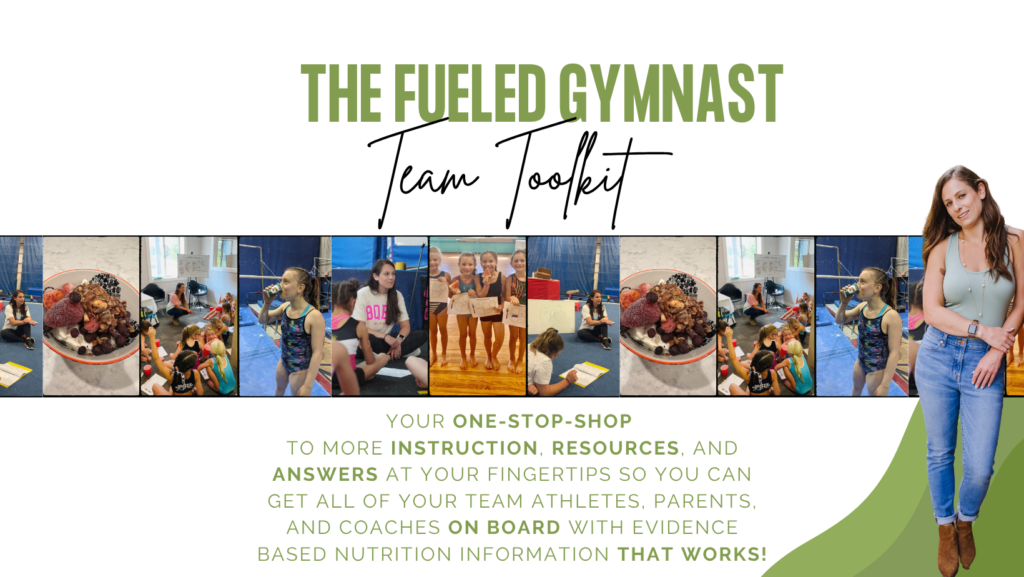
If you’re a gymnastics coach, club owner, parent, or part of a parent association who wants to make nutrition education more accessible, I’d love to introduce you to The Fueled Gymnast Team Toolkit.
I created this resource because I’ve seen how challenging it can be for gymnastics families and coaches to find reliable, sport-specific nutrition information.
You shouldn’t have to spend hours searching the internet, sorting through conflicting advice, or wondering whether the recommendations you’re following actually make sense for a competitive gymnast.
And coaches shouldn’t have to navigate nutrition questions without knowing where to turn for qualified guidance.
The Fueled Gymnast Team Toolkit brings together practical nutrition education and resources designed specifically for the gymnastics community.
It’s designed to help parents, coaches, and gymnasts build a shared understanding of fueling and make evidence-based nutrition information easier to put into practice.
Rather than piecing together information from different sources, your team can work from a consistent foundation of guidance that takes the unique demands of gymnastics and the needs of growing athletes into account.
The goal isn’t perfection.
It’s progress toward a gymnastics culture where fueling is understood, supported, and treated as an important part of athlete development.
Because when we give gymnasts the right support, we give them a better opportunity to feel strong, recover well, develop healthy habits, and continue pursuing the sport they love.
Ready to bring a TEAM approach to nutrition at your gym?
Explore The Fueled Gymnast Team Toolkit and discover how you can help parents, coaches, and gymnasts get on the same page about fueling.
Let’s make sure nutrition is part of the conversation long before an athlete is struggling.
Because every gymnast deserves a team that’s invested in their health, their performance, and their future.