The Hydration Mistake Most Gymnasts Don’t Realize They’re Making
It’s the middle of a long summer practice. Your gymnast suddenly feels sluggish, starts missing skills she usually nails, and complains of a headache on the drive home. Most parents assume she just had a hard workout. But the real culprit might be something much simpler: she didn’t drink enough throughout the day.
When most gymnasts think about improving performance, they focus on skills, strength, flexibility, conditioning, and maybe even nutrition.
But there’s one performance habit that often gets overlooked…
Hydration.
Many gymnasts assume they’re drinking enough simply because they bring a water bottle to practice. And so many gymnasts only take a sip in between events or when they feel thirsty.
The problem?
By the time you feel thirsty, your body is already starting to become dehydrated.
Even mild dehydration can impact energy, focus, coordination, and recovery; all things that matter when you’re trying to stick a beam routine, learn a new skill, or make it through a long summer practice.
Let’s talk about why hydration deserves more attention and the simple habits that can help gymnasts perform at their best.
Why Hydration Matters for Gymnasts
Water plays a role in almost every system in your body. It helps:
- Regulate body temperature
- Transport nutrients and oxygen around the body
- Support muscle contractions
- Lubricate joints
- Maintain focus and reaction time
- Remove waste and the byproducts of exercise
- Support recovery after training
Although gymnastics isn’t usually thought of as a “sweaty” sport like soccer or cross country, gymnasts still lose a surprising amount of fluid, especially during long summer practices and extra conditioning workouts.
When those fluid losses aren’t replaced, your body has to work harder to do the same amount of work.
That means less energy for practice and potentially slower recovery afterward.
The Biggest Hydration Mistake: Waiting Until You’re Thirsty
One of the most common hydration mistakes I see is gymnasts waiting until they feel thirsty before they drink.
The problem is that thirst isn’t an early warning sign. And it’s not always reliable during exercise.
Your body can lose a meaningful amount of fluid before your brain even tells you it’s time to drink. Especially if you’re focused on your workout, it’s easy to miss the signal.
Even losing just a small percentage of your body’s water can lead to:
- Feeling tired earlier in practice
- Decreased concentration
- Slower reaction time
- Feeling like practice is harder than it should be
- Reduced training quality
In a sport built on precision, timing, balance, and body awareness, those small changes can make a big difference.
Signs You Might Not Be Drinking Enough
Dehydration isn’t always obvious.
In fact, many gymnasts likely walk around dehydrated without even realizing it.
Some signs include:
- Headaches
- Dizziness
- Dry mouth
- Feeling unusually tired
- Difficulty concentrating
- Muscle cramps
- Dark yellow urine
- Feeling wiped out or taking longer to recover after practice
Of course, these symptoms can have many different causes (including not eating enough or enough carbohydrates) and hydration is just one piece of the puzzle.
But it’s an easy place to start.
How Much Water Does a Gymnast Need?
This is one of the questions I get asked most often.
The truth is…
There isn’t one magic number.
Fluid needs depend on things like:
- Age
- Body size
- Sweat rate
- Practice intensity
- Practice length
- Temperature and humidity
Instead of chasing a specific ounce goal, I encourage gymnasts to build consistent hydration habits throughout the day.
That means:
- Drinking regularly (not just at practice)
- Having a beverage with all meals and snacks
- Bringing a water bottle everywhere you go
- Incorporating hydration into your workouts (and not just waiting for designated water breaks)
Hydration is something you build over the course of the day, not something you try to “catch up” on five minutes before practice starts.
What Should Gymnasts Drink?
Outside of practice, my most recommended hydration options include:
- Water (plain, flavored, even sparkling)
- Milk
- 100% fruit juice
And don’t forget…
You can eat your fluids, too.
Foods with high water content can help support hydration throughout the day, including:
- Melons (like watermelon)
- Strawberries
- Pineapple
- Oranges
- Cucumbers
- Tomatoes
- Soup
- Yogurt
- Smoothies
Every little bit adds up.
Hydration Before Practice
One of the biggest performance advantages is simply showing up hydrated.
Instead of trying to chug a bottle of water right before warm-up, focus on drinking consistently throughout the day.
A few easy habits include:
- Drinking with breakfast, lunch, and dinner
- Having 8-16oz fluids with your pre-practice meal or snack
Hydration During Practice
It’s easy to get caught up in assignments and forget to drink.
Instead of waiting until you’re thirsty, make it a habit to take a few sips every 10-15 minutes. It may be easier to bring your drink with you to your events when possible to keep your hydration front and center.
Small, frequent sips are often much more comfortable than drinking a large amount all at once and improve the body’s ability to absorb the water.
For most practices lasting less than 2 hours, plain water is a great choice.
For longer, more intense practices or when training in the heat or humidity, it may be helpful to replace electrolytes. Sodium, in particular, helps your body retain fluid and replace what is lost through sweat.
Hydration After Practice
Recovery starts as soon as practice ends. Replacing fluids after training helps support:
- Rehydration
- Muscle function
- Recovery
- Preparation for tomorrow’s practice
An easy recovery routine might include:
- Water or milk
- A snack with carbohydrates and protein
- Continuing to drink up to 16-24oz of fluids over the next several hours
Think of hydration as part of your recovery nutrition, not something separate from it.
How do I Know If I am Well Hydrated
One simple way to monitor hydration is by checking urine color.
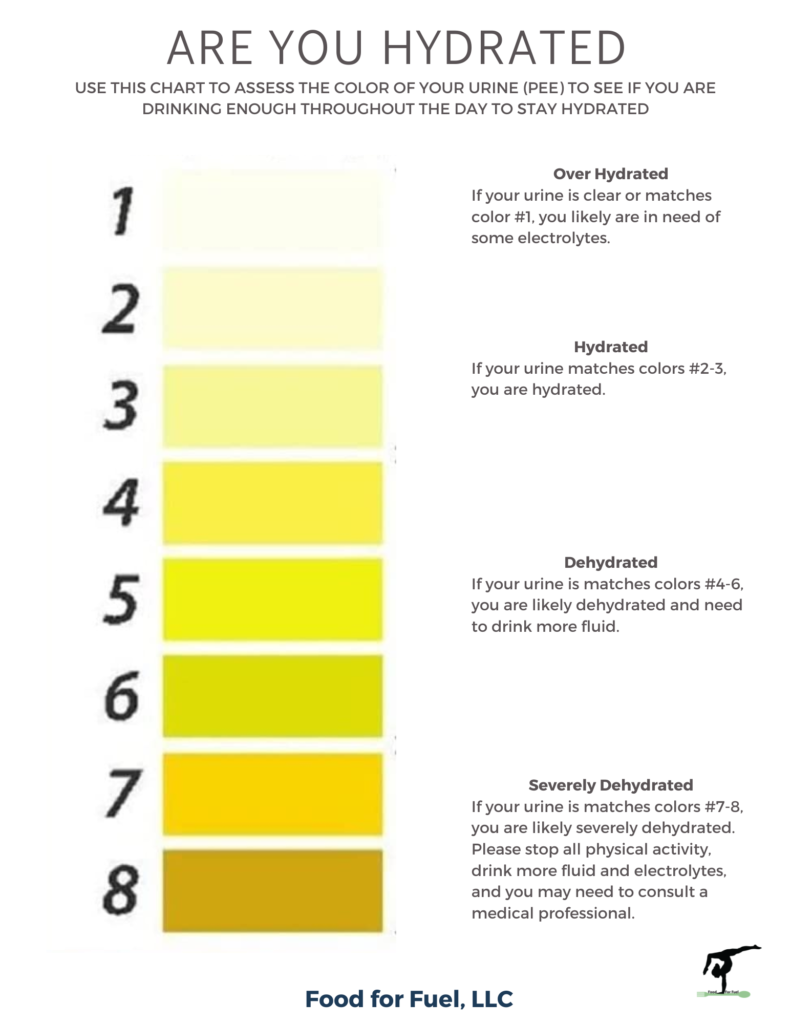
Aim for pale yellow most of the time. Dark yellow urine may be a sign you need more fluids and completely clear urine may be a sign you need more electrolytes.
The Bottom Line
Hydration isn’t the flashiest part of sports nutrition, but it can have a huge impact on how a gymnast feels in the gym.
The biggest mistake isn’t forgetting your water bottle.
It’s waiting until you’re thirsty to use it.
Instead, focus on simple habits you can repeat every day:
- Drink consistently throughout the day.
- Start practice hydrated.
- Take advantage of every water break.
- Replace fluids after practice.
- Pay attention to signs that your body may need more fluids.
Small habits, repeated consistently, often lead to the biggest improvements in energy, focus, recovery, and performance.
Want Help Fueling Every Part of Your Gymnast’s Performance?
Hydration is just one piece of the performance puzzle.
If you’re constantly wondering whether your gymnast is eating enough, drinking enough, recovering well, or getting the nutrients they need to support growth and training, you don’t have to figure it out alone.
Inside the Fueled Gymnast Academy, I teach families exactly how to fuel for practices, competitions, recovery, growth, and long-term health using practical, real-life strategies that actually fit busy gymnastics schedules. From meal planning and snack ideas to hydration, recovery, and confidence around food, you’ll have the tools you need to help your gymnast feel stronger, recover better, and perform with confidence.
Because great gymnastics doesn’t just happen in the gym, it starts with how athletes fuel outside of it.