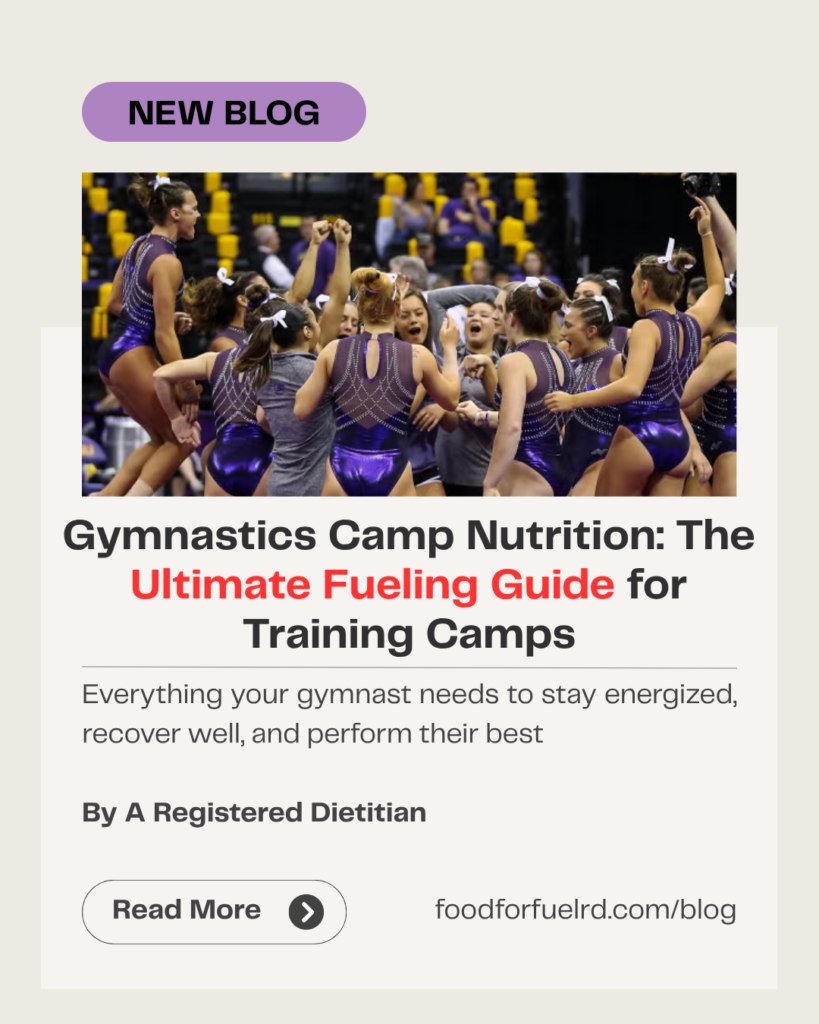
Gymnastics Camp Nutrition: The Ultimate Fueling Guide for Training Camps
Summer training camps are one of the most exciting parts of the gymnastics year. Whether your gymnast is attending a week-long summer camp, an intensive training camp, or a college gymnastics camp, it’s a chance to learn new skills, gain confidence, and spend extra time in the gym doing what they love.
But with all of that extra training comes one important question:
Is your gymnast eating enough to support it?
For many gymnasts, the answer is no.
One of the biggest misconceptions I hear from parents is, “She’s training more, so she’ll naturally eat more.” Unfortunately, that’s not always what happens.
Long practice days, busy camp schedules, excitement, nerves, and limited breaks between workouts often make it harder (not easier) for gymnasts to eat enough.
The result? Low energy, slower recovery, difficulty learning new skills, decreased focus, and a greater risk of illness and overuse injuries.
The good news is that fueling for gymnastics camp doesn’t have to be complicated. With a little planning, your gymnast can head into every practice with the energy they need to train hard, recover well, and make the most of every day.
Why Gymnastics Camp Nutrition Matters
Training camp isn’t just a regular week at the gym. Depending on the camp, your gymnast may be:
- Training 5–8 hours each day
- Learning new skills
- Spending more time on drills, conditioning, and strength
- Participating in multiple practices each day
- Walking around a campus or training facility between sessions
- Sleeping in a different environment than they’re used to
All of those activities increase your gymnast’s energy needs.
Think of food as the fuel that powers every turn, tumble, vault, swing, and routine. Without enough energy coming in, the body simply can’t keep up with everything it’s being asked to do.
When gymnasts consistently fuel well throughout camp, they’re more likely to:
- Have steady energy throughout the day
- Stay mentally focused during practice
- Learn and retain new skills more effectively
- Recover faster between workouts
- Support healthy growth and development
- Reduce their risk of fatigue-related injuries
On the other hand, under fueling can make even the best training opportunities feel frustrating. When energy stores run low, gymnasts often feel tired, sore, irritable, or mentally “checked out” long before practice is over.
Remember, training camp isn’t the time to “eat clean” or worry about eating less. It’s the time to make sure your gymnast is eating enough.
Start Camp Well Fueled
Fueling for camp actually starts before your gymnast walks into the gym.
Many athletes are so excited (or nervous) about camp that they unintentionally skip meals, eat lightly when traveling, or forget to stay hydrated. Starting camp in an energy deficit can make those first few days feel much harder than they need to.
The day before camp, encourage your gymnast to focus on:
- Eating 3-4 balanced meals
- Including balanced snacks if there’s more than 3–4 hours between meals
- Drinking fluids consistently throughout the day (and incorporating electrolytes when needed)
- Choosing a carbohydrate-rich dinner to top off their energy stores
And remember, carbohydrates are your gymnast’s primary fuel source during training. Eating enough the day before camp helps fill muscle glycogen stores, which provide the energy needed for long hours in the gym.
Don’t Skip Breakfast
If camp starts in the morning, breakfast is one meal your gymnast definitely shouldn’t skip.
After sleeping all night, their body has gone several hours without food. Breakfast helps replenish energy stores, supports their brain (focus and mood), and prepares them for the first practice of the day.
Aim for a meal that includes:
- Carbohydrates for energy
- Protein for muscle support
- Essential fats for lasting satisfaction
Some easy breakfast ideas include:
- Oatmeal made with milk and topped with fruit and peanut butter
- Eggs with buttered whole-grain toast and fruit
- Pancakes or waffles, breakfast meat, and fruit
- Greek yogurt with granola, berries, and seeds
- A bagel with cream cheese, a banana, and a glass of milk
- A fruit smoothie with milk or Greek yogurt and a granola bar on the side
If your gymnast isn’t hungry first thing in the morning, encourage them to eat something small before practice and pack another breakfast item to eat later when they start to feel hungry. Eating something is always better than eating nothing.
Fuel Before Every Practice
One of the simplest ways to improve energy during camp is making sure your gymnast eats before every practice.
Think of pre-practice meals as filling the gas tank before a long road trip. You wouldn’t expect your car to make it hundreds of miles on an empty tank, and your gymnast’s body works the same way.
Ideally, your gymnast should eat a balanced meal about 1-2 hours before training.
That meal should be centered around carbohydrates while also including a moderate amount of protein, fiber, and fats.
Some great options include:
- Turkey sandwich with fruit and pretzels
- Rice with grilled chicken and a side of fruit
- Pasta with meat sauce
- Burrito bowl with rice, chicken, beans, and salsa
- Bagel with peanut butter and fruit
- Stir-fry with rice and protein
Sometimes camp schedules don’t allow for a full meal before practice. If there’s less than an hour until training, choose something that’s easy to digest and rich in carbohydrates.
Good options include:
- Applesauce pouches
- Bananas
- Pretzels
- Graham crackers
- Granola bars
- Waffles
- Dry cereal
- Fig bars
The goal isn’t to find the “perfect” pre-practice snack. The goal is simply to make sure your gymnast starts practice with energy available instead of trying to train on an empty stomach.
And remember, every gymnast is different. Camp isn’t the time to experiment with brand-new foods. Stick with meals and snacks your gymnast already knows sit well before practice.
Coming prepared with familiar favorites can help reduce stress and make fueling one less thing to worry about during an already busy week.
The Importance of Fueling Between and After Practices
One of the biggest fueling mistakes I see at gymnastics camps is waiting until dinner to eat after a long practice.
After several hours in the gym, it’s easy for gymnasts to get caught up talking with friends, engaging in fun activities, walking around campus, attending educational sessions, or simply relaxing. Before they know it, it’s time for practice again (and they haven’t eaten since breakfast or lunch).
That’s a huge problem.
Every practice uses up muscle glycogen, the carbohydrate your body stores in your muscles and liver to fuel training. The longer and more intense the practice, the more those energy stores become depleted.
If your gymnast doesn’t replace some of that energy before the next workout, they may notice:
- Lower energy during practice
- Difficulty concentrating while learning new skills
- Feeling weaker during conditioning
- Slower recovery between sessions
- Increased soreness
- Greater risk of fatigue-related injuries
Think of recovery as preparing for the next practice, not just recovering from the last one.
A recovery snack doesn’t need to be complicated. The goal is to provide carbohydrates to replenish energy stores along with protein to begin repairing and rebuilding muscle.
Aim to eat within about 0-60 minutes after practice, especially if another practice is scheduled later that day.
Some easy recovery snack ideas include:
- Chocolate milk
- Greek yogurt with fruit
- Cheese sticks and whole grain crackers
- Peanut butter sandwich
- Cottage cheese with fruit
- Trail mix
- A protein smoothie made with fruit and milk
- Turkey and cheese roll-ups with pretzels
- Yogurt drink and a granola bar
If your gymnast won’t have another practice that day, they can transition from a recovery snack into a balanced meal instead.
The key is not waiting until they’re starving to eat. Recovery starts as soon as practice ends.
Hydration Is Part of Fueling
When most people think about sports nutrition, they think about food.
But hydration plays just as important a role in helping gymnasts perform their best.
Even mild dehydration can affect:
- Energy levels
- Focus and concentration
- Coordination
- Reaction time
- Strength and power output
- Recovery
And while gymnasts may not always think of themselves as “sweaty athletes,” many training camps take place during the hottest months of the year. Add longer practices, warm gyms, outdoor walks between sessions, and limited opportunities to drink, and dehydration can happen faster than many families realize.
Instead of trying to “catch up” after practice, encourage your gymnast to drink fluids consistently throughout the day.
Some simple habits include:
- Carry a reusable water bottle everywhere.
- Drink with every meal and snack.
- Take advantage of water breaks during practice.
- Refill the water bottle between training sessions.
- Check urine color throughout the day (it should generally be pale yellow).
If your gymnast is training in a hot environment, sweating heavily, or participating in multiple practices each day, an electrolyte beverage may also be helpful.
Electrolytes, especially sodium, help replace minerals lost in sweat and encourage the body to retain the fluids it drinks.
Sports drinks can also provide carbohydrates, making them especially useful during longer or more intense training days when gymnasts need both hydration and additional energy.
Remember, hydration doesn’t begin once practice starts. It begins when your gymnast wakes up and continues until they go to bed.
What to Pack for Gymnastics Training Camp
One of the easiest ways to help your gymnast stay fueled is to pack plenty of portable snacks before camp begins.
Camp schedules often change, cafeteria lines can be long, and meal options don’t always line up with practice times. Having familiar foods readily available makes it much easier to fuel consistently throughout the day.
When packing snacks, think about foods that provide energy, support recovery, travel well, and are easy to grab between activities.
Carbohydrate-Rich Snacks for Energy
These foods help refill glycogen stores and provide quick energy before the next practice.
Some great options include:
- Pretzels
- Bagels
- Graham crackers
- Granola bars
- Fig bars
- Dry cereal
- Crackers
- Rice cakes
- Applesauce pouches
- Fruit cups
- Bananas
- Apples
- Oranges
- Dried fruit
- Instant oatmeal packets
Protein-Rich Foods for Recovery
Protein helps repair muscles stressed during long training days.
Pack options like:
- Peanut butter packets
- Mixed nuts
- Trail mix
- Roasted chickpeas
- Beef or turkey jerky
- Protein bars
- Shelf-stable milk boxes or protein drinks
- Tuna packets
- Individual nut butter squeeze packs
If refrigeration is available, consider adding:
- Greek yogurt
- Cottage cheese
- String cheese
- Hummus cups
- Hard-boiled eggs
- Turkey roll-ups
Easy Grab-and-Go Snack Combinations
Pairing carbohydrates with protein helps provide lasting energy while supporting recovery.
Some of my favorite combinations include:
- Peanut butter and crackers
- Apple with peanut butter
- Cheese sticks and pretzels
- Greek yogurt and granola
- Chocolate milk and a banana
- Trail mix and dried fruit
- Turkey sandwich and fruit
- Cottage cheese with peaches
- Granola bar and milk
Don’t get so caught up in finding the “perfect” snack that you forget the bigger picture.
The best snack is the one your gymnast enjoys, has access to, and will actually eat.
Don’t Count on the Concession Stand
Many camps have vending machines, snack bars, or concession stands available.
While these can certainly be helpful in a pinch, I don’t recommend relying on them as your gymnast’s primary source of fuel.
Food choices may be limited, lines can be long, items may sell out, and there may not be enough time between practices to wait for food.
Packing familiar snacks ahead of time gives your gymnast more control over their fueling and makes it much more likely they’ll eat when their body needs it—not just when food happens to be available.
A little preparation before camp can make a big difference by the end of the week.
Recovery Starts With Your Plate
Recovery doesn’t begin with stretching, sleep, or even the next morning; it begins with the first meal or snack after practice.
Every workout uses up stored carbohydrates (glycogen), places stress on muscles, and causes your body to use fluids and electrolytes. Eating after practice helps replenish those energy stores so your gymnast is ready to do it all again the next day (or even later that afternoon or evening).
Whenever possible, encourage your gymnast to eat a balanced meal within about an hour after their final practice of the day.
A recovery meal should include:
- 🍚 Carbohydrates to replenish glycogen stores and restore energy
- 🥚 Protein to repair and rebuild muscles stressed during training
- 🥑 Essential fats to support hormone production and overall health
- 🥦 Colorful fruits and vegetables to provide vitamins, minerals, antioxidants, and fiber that support recovery and immune function
Recovery meals don’t have to be complicated or “perfect.” What matters most is eating enough to replace the energy that was used during training.
Some great recovery meal ideas include:
- Grilled salmon, rice, and roasted vegetables
- Pasta with meat sauce and a side salad
- Burrito bowl with rice, beans, chicken, salsa, and guacamole
- Turkey sandwich with fruit and Greek yogurt
- Stir-fry with rice and lean protein
- Baked potato with chili and shredded cheese
- Homemade pizza with fruit on the side
One of the biggest mistakes I see is gymnasts waiting until they’re “really hungry” before eating after practice. By then, they’ve already delayed the recovery process.
Even if your gymnast isn’t especially hungry after training, encourage them to start with something small. Appetite often returns once they begin eating.
Remember, recovery nutrition isn’t just about helping your gymnast feel better today, it’s about preparing their body to perform well tomorrow.
Don’t Skip Evening Recovery
After a full day of gymnastics, many athletes are exhausted. They shower, relax with teammates, and are ready for bed.
But before they turn out the lights, ask yourself one question:
Have they fueled their recovery?
Even after dinner, many gymnasts benefit from a bedtime snack, especially during training camp, when their energy needs are significantly higher than usual.
A bedtime snack provides one last opportunity to replace energy stores, support muscle repair overnight, and help your gymnast wake up feeling more refreshed for another demanding day of training.
Some simple bedtime snack ideas include:
- Greek yogurt with granola
- Banana with peanut butter
- Chocolate milk and graham crackers
- Cottage cheese with fruit
- Peanut butter toast
- Trail mix and dried fruit
- Cheese and crackers
- Cereal with milk
If your gymnast says they’re hungry before bed, listen to that hunger.
It’s your body’s way of asking for more fuel, not a sign they’ve eaten “too much.”
During camp, hunger is expected. In fact, it’s often a sign your gymnast is working hard and needs additional energy to support training, recovery, and growth.
Common Gymnastics Camp Fueling Mistakes
Even families who prioritize nutrition can make a few common mistakes during camp week. The good news is that they’re easy to fix.
Waiting Until Hunger Strikes
By the time your gymnast feels extremely hungry, they’ve often been running low on energy for quite a while.
Instead of waiting for hunger, encourage them to eat consistently throughout the day—even if they don’t feel especially hungry between practices.
Packing Plenty of Water but Not Enough Food
Hydration is important, but water alone doesn’t provide energy.
One of the most common mistakes I see is gymnasts carrying a giant water bottle but only packing one small snack for an entire day of training.
Think of food and fluids as teammates—they work best together.
Being Afraid to Eat More
Longer practices require more fuel.
Many gymnasts don’t realize how much their energy needs increase during training camp and worry that eating more means they’re eating “too much.”
The reality is exactly the opposite.
When training volume increases, your gymnast’s nutrition needs increase, too.
Eating more during camp isn’t “over-eating.” It’s fueling appropriately for the work their body is doing.
Trying New Foods During Camp
Camp week isn’t the time to experiment with unfamiliar sports drinks, supplements, protein powders, or snacks.
Stick with foods your gymnast already enjoys and knows digest well before and after practice.
Familiar foods reduce stress and help prevent unwanted stomach issues during training.
The Bottom Line
Training camp is one of the best opportunities for gymnasts to build confidence, improve skills, and make meaningful progress—but only if they’re giving their bodies the fuel they need to keep up with the demands of training.
The goal isn’t to eat perfectly for one week. It’s to consistently eat enough to support performance, recovery, growth, and long-term health.
By eating balanced meals, fueling before and after practice, packing plenty of snacks, staying hydrated, and listening to hunger cues, your gymnast will have the energy they need to get the most out of every day at camp.
Remember, food isn’t just something that fits into the schedule between practices. It’s one of the most important training tools your gymnast has.
Want More Help Fueling Your Gymnast?
If you’ve ever found yourself wondering:
- Is my gymnast eating enough?
- What should I pack for practice?
- How much protein do they actually need?
- What should they eat before a meet?
- How do I know if they’re fueling well enough to support growth, recovery, and performance?
You’re not alone.
These are the exact questions I help parents answer every day.
Inside the Fueled Gymnast Academy, you’ll learn how to confidently fuel your gymnast through every stage of the season—from summer training camps and preseason conditioning to competition season, growth spurts, injuries, and everything in between.
The Fueled Gymnast Academy includes practical, easy-to-follow lessons, meal and snack ideas, fueling guides, and evidence-based strategies designed specifically for gymnasts and their families. Instead of guessing what your gymnast should eat, you’ll have a clear roadmap to help support their performance, recovery, and long-term health.
Because when gymnasts are consistently fueled, they don’t just perform better—they recover better, stay healthier, have more energy, and enjoy the sport they love even more.
If you’re ready to stop second-guessing nutrition and start fueling with confidence, I’d love to support you inside the Fueled Gymnast Academy.
Related Articles You May Also Enjoy
If you found this guide helpful, here are a few more resources to help you fuel your gymnast throughout the season:
- The Hydration Mistake Most Gymnasts Don’t Realize They’re Making – Learn why hydration is about more than just drinking water and how to keep your gymnast performing their best during long training days.
- Why Eating After Practice Matters – Discover why the hour after practice is one of the most important opportunities to support recovery and prepare for the next workout.
- The Gymnast’s Guide to Mid-Practice Fueling – Learn when gymnasts should eat during longer practices and which snacks provide the best energy without causing stomach discomfort.
The more consistently your gymnast fuels throughout the year—not just during camp—the more prepared they’ll be to thrive in training and competition.